The clubs of St James's
One short street, three centuries of men who would rather not be disturbed, and the doors that still decide who comes in.
- By
- The Index
- Published
- Length
- 4 minute read
- Filed from
- St James's, London
St James's Street runs downhill from Piccadilly to the gatehouse of St James's Palace. It is not long. You can walk it in four minutes, which is about how long it takes to notice that the best rooms on it are not for you.
This is the heart of what Londoners still call clubland. The clubs here are not the largest in the world, nor the richest. They are simply the ones that wrote the rules everyone else copied: a house, a committee, a book of members, and a front door that opens only from the inside.
A chocolate house, then the tables
The register begins with White's. It opened in 1693 as Mrs White's Chocolate House, run by an Italian, Francesco Bianco. Chocolate did not hold the room for long. By the early eighteenth century the house was known for gambling, and its members for being "the gamesters of White's". Jonathan Swift called it the bane of half the English nobility, which was meant as a complaint.
In 1778 the club settled at 37 and 38 St James's Street, and it has not moved since. The façade you see today was designed in 1852 by James Lockyer. Its most famous feature is the ground-floor bow window. The table behind it was the best seat in London society. Beau Brummell held it until 1816, then Lord Alvanley, then the Duke of Wellington until his death in 1852. Alvanley is said to have bet £3,000 on which of two raindrops would reach the bottom of a pane first. The club's betting book records wagers on politics, war and the private lives of others, which is to say the usual.
White's remains a club for gentlemen only. That has cost it the occasional member: David Cameron resigned in 2008 over its refusal to admit women. It has not, so far, cost it its waiting list.
The Whigs across the road
Brooks's began in March 1764, founded by twenty-seven Whig noblemen at William Almack's former tavern on Pall Mall. It was first called Almack's. In 1778 it moved into a Palladian clubhouse at 60 St James's Street, designed by Henry Holland and paid for by William Brooks, a wine merchant and money lender. The club took his name, which seems fair.
The early members played whist and hazard through the night and recorded their wagers in a book of their own. One from 1785 concerns a balloon flight. Charles James Fox joined at sixteen. Brooks's is no longer aligned with any party, though it would be a brave man who described it as apolitical at dinner.
Boodle's, a few doors up at number 28, was founded in January 1762 by the Earl of Shelburne, later Prime Minister. It too began at Almack's, and took its present name from Edward Boodle, who ran it from about 1764. It has occupied its current house since 1782, a building designed by John Crunden in 1775. The members' list is a reading list: Adam Smith, David Hume, Edward Gibbon, William Wilberforce, and later Ian Fleming. Membership is by nomination and election, as it is nearly everywhere on this street.
They are simply the ones that wrote the rules everyone else copied.
The Tories, bombed and rehoused
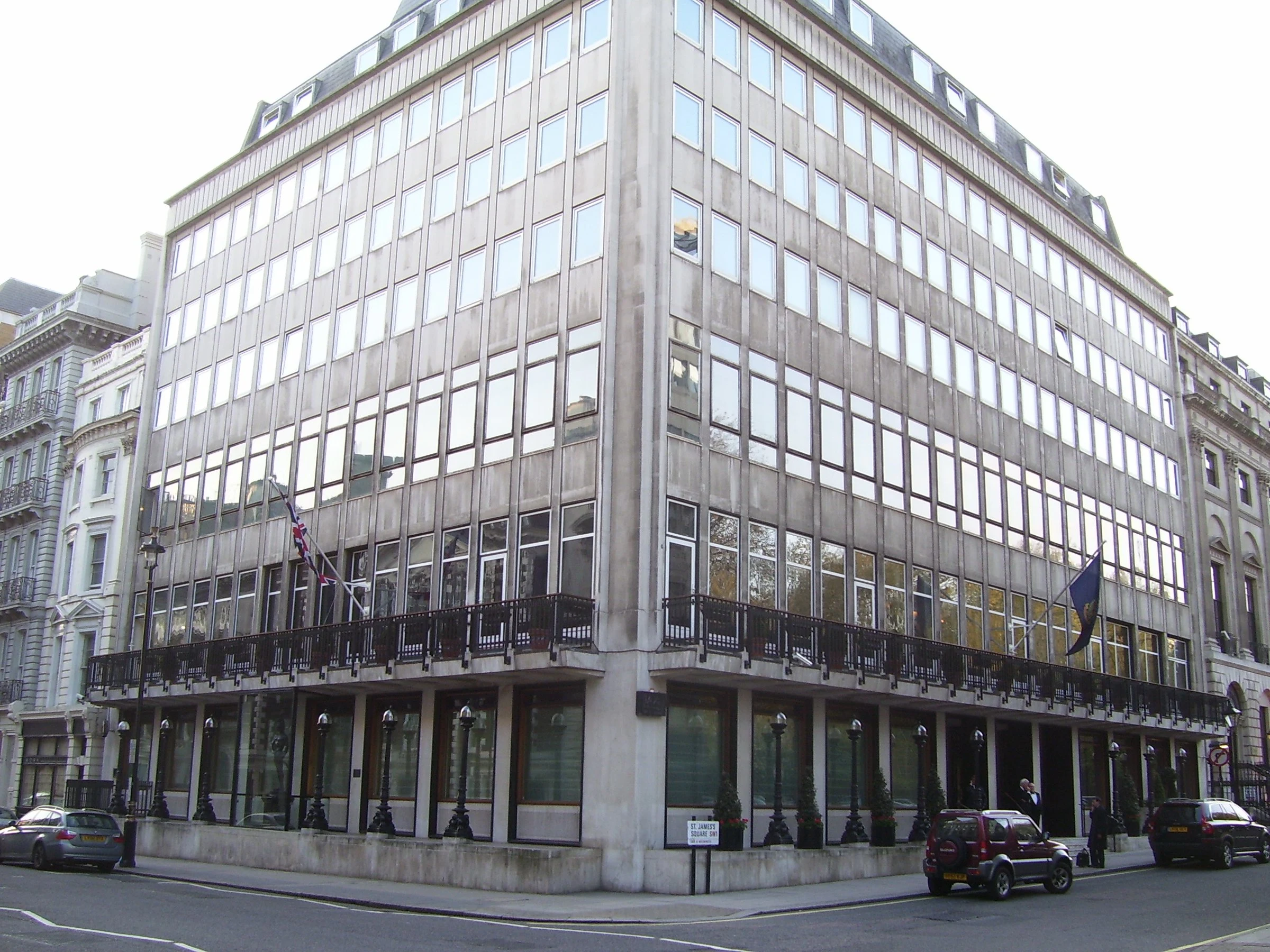
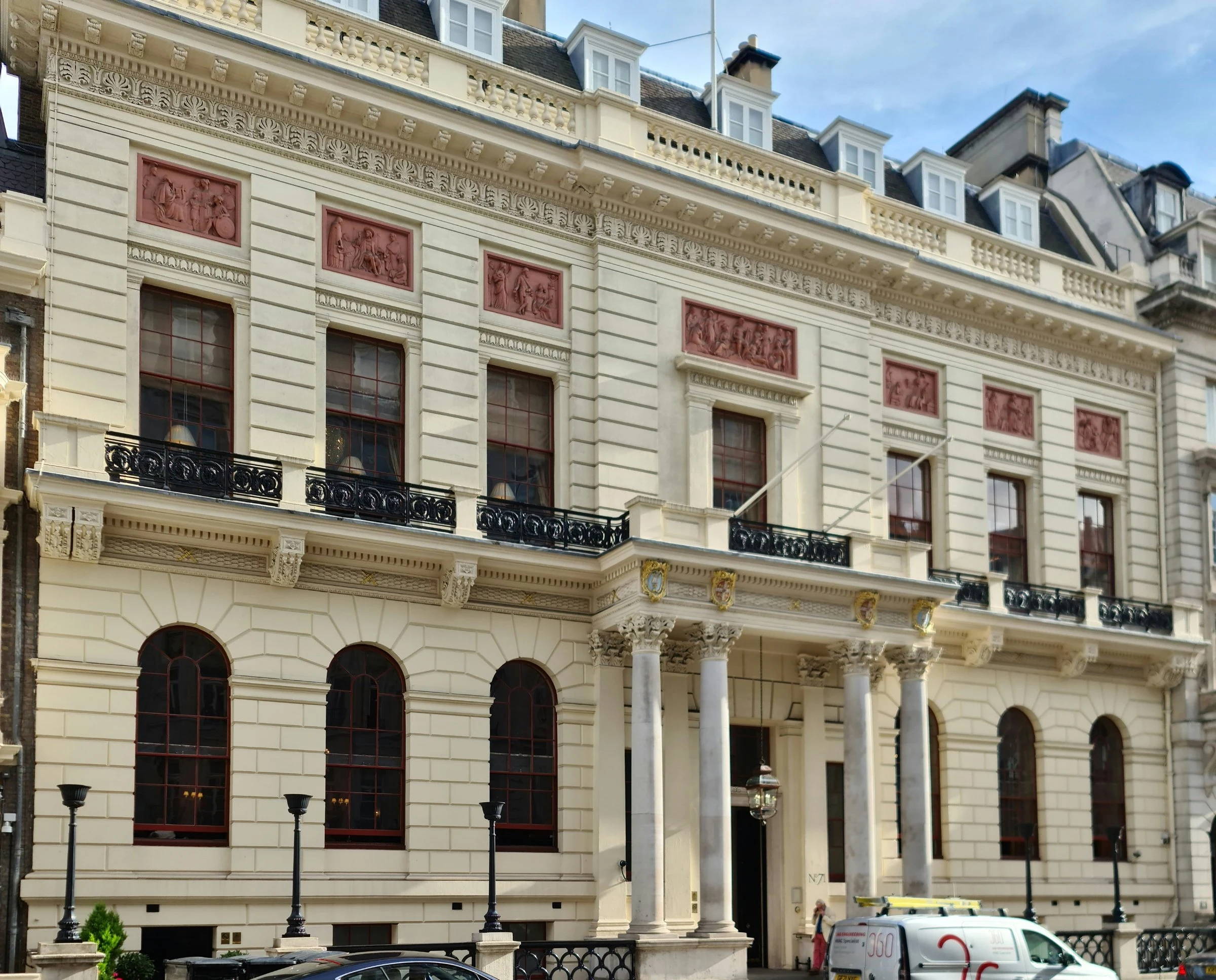
The Carlton Club, register No. 040 came later, and for a reason. It was founded in 1832 by the Duke of Wellington and other Tories, regrouping after the Reform Act. Its first rooms were on Carlton House Terrace, hence the name, before it moved to Pall Mall. On 14 October 1940 a bomb scored a direct hit on the Pall Mall clubhouse. The club moved at once to 69 St James's Street, the former home of Arthur's, and has stayed.
The Carlton was the Conservative Party's original home, before there was a Central Office to go to. Margaret Thatcher was made an honorary member in 1975 on becoming party leader; for decades she was the only woman entitled to full membership. That changed in 2008, and in 2009 the club elected her its president.
The smallest table in clubland
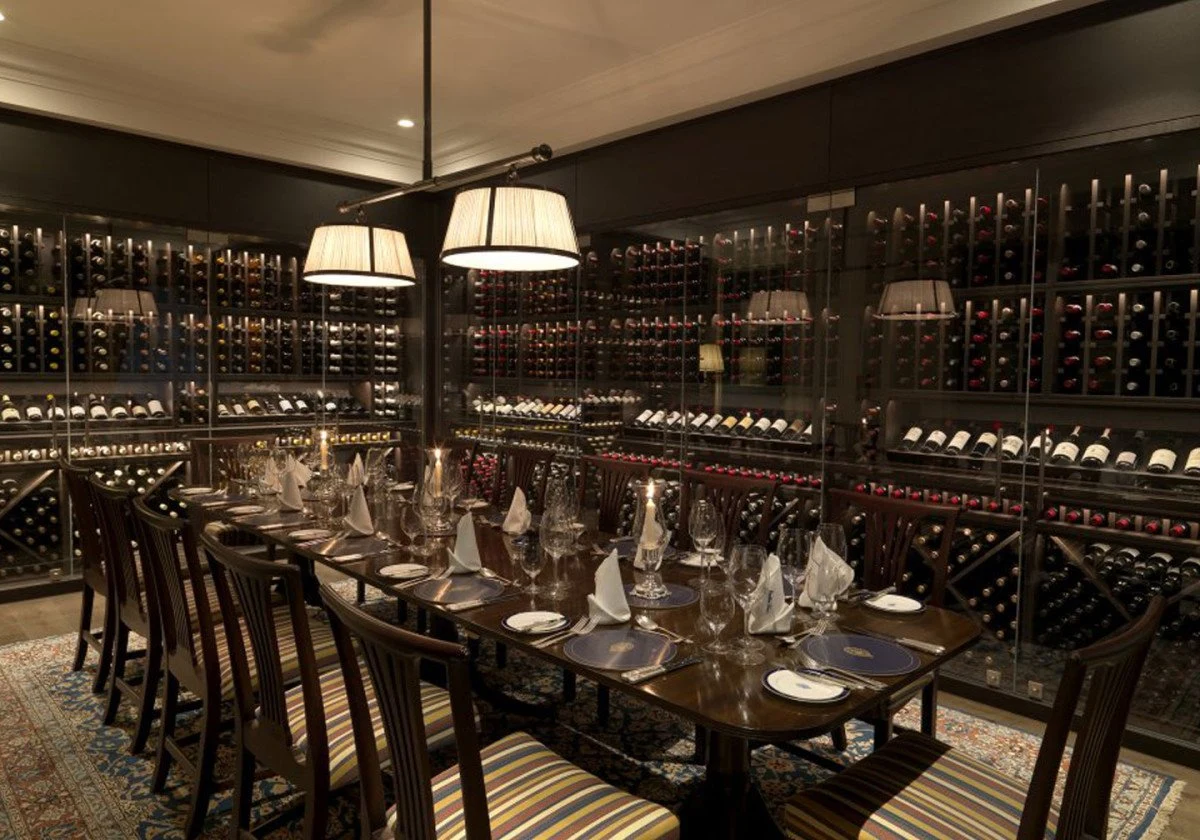
Turn up Park Place and you reach Pratt's, founded in 1857 in the house of William Nathaniel Pratt. It later passed to the Dukes of Devonshire and remains in the Cavendish family. It has around 600 members and a single basement dining table that seats fourteen. Every male member of staff is addressed as George. The custom avoids confusion. It also, one suspects, avoids conversation.
Around the corner, the palaces
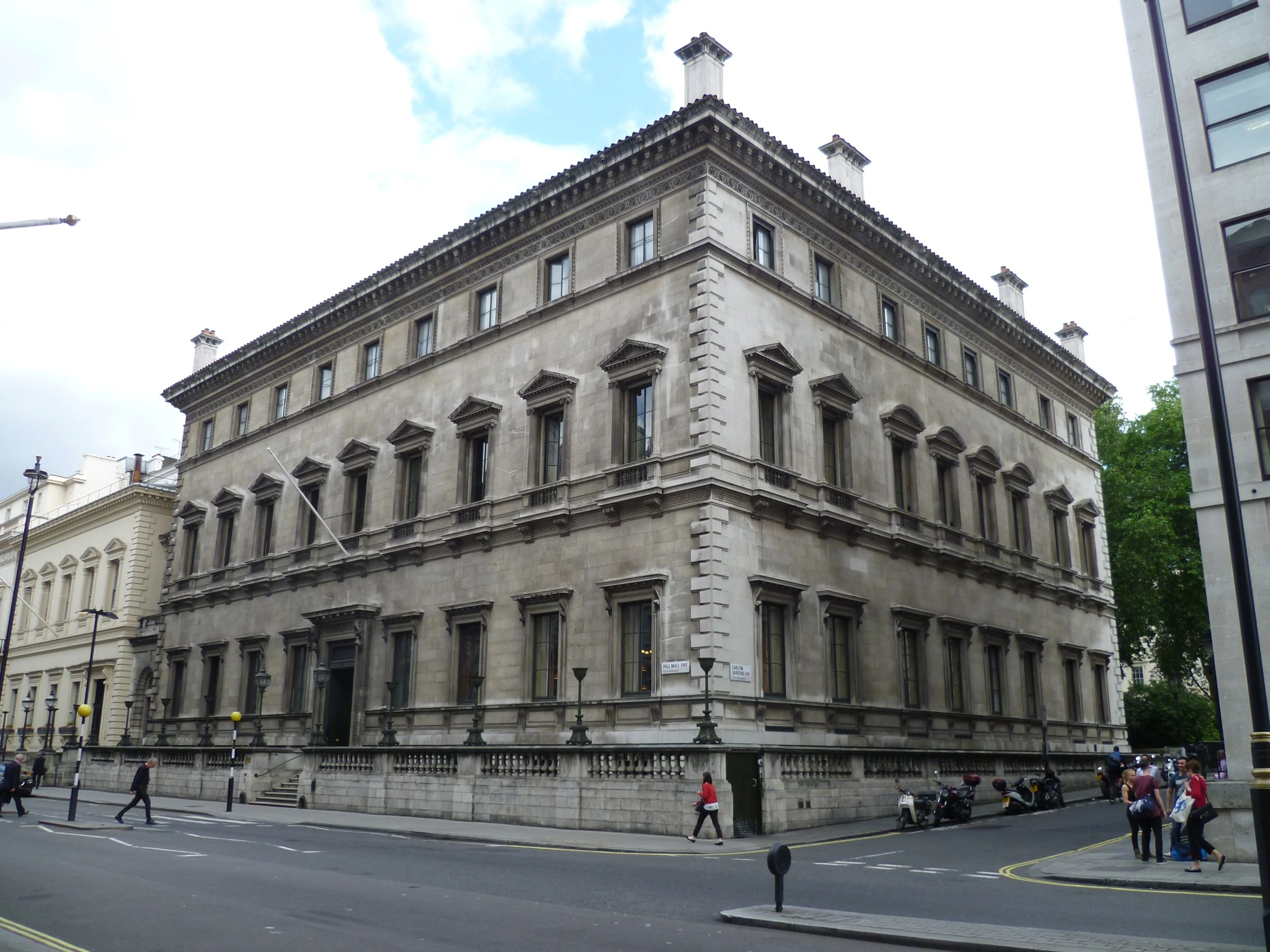
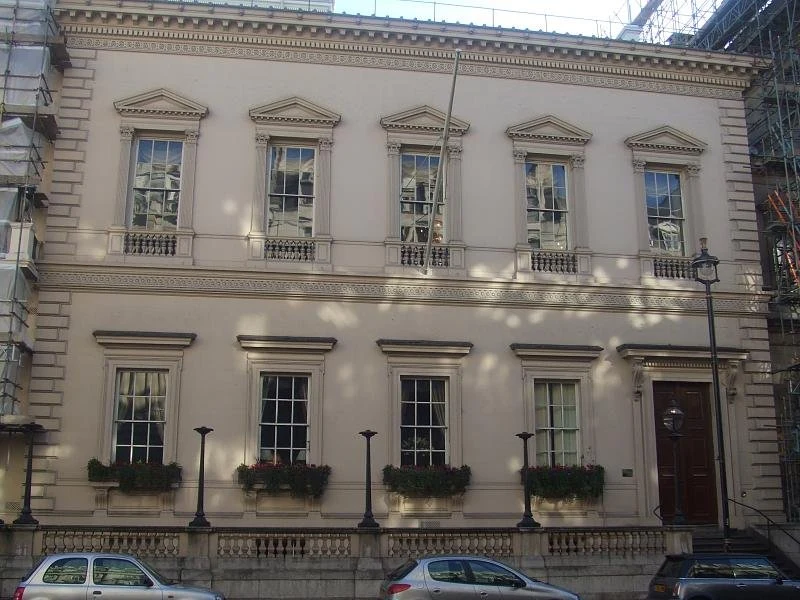
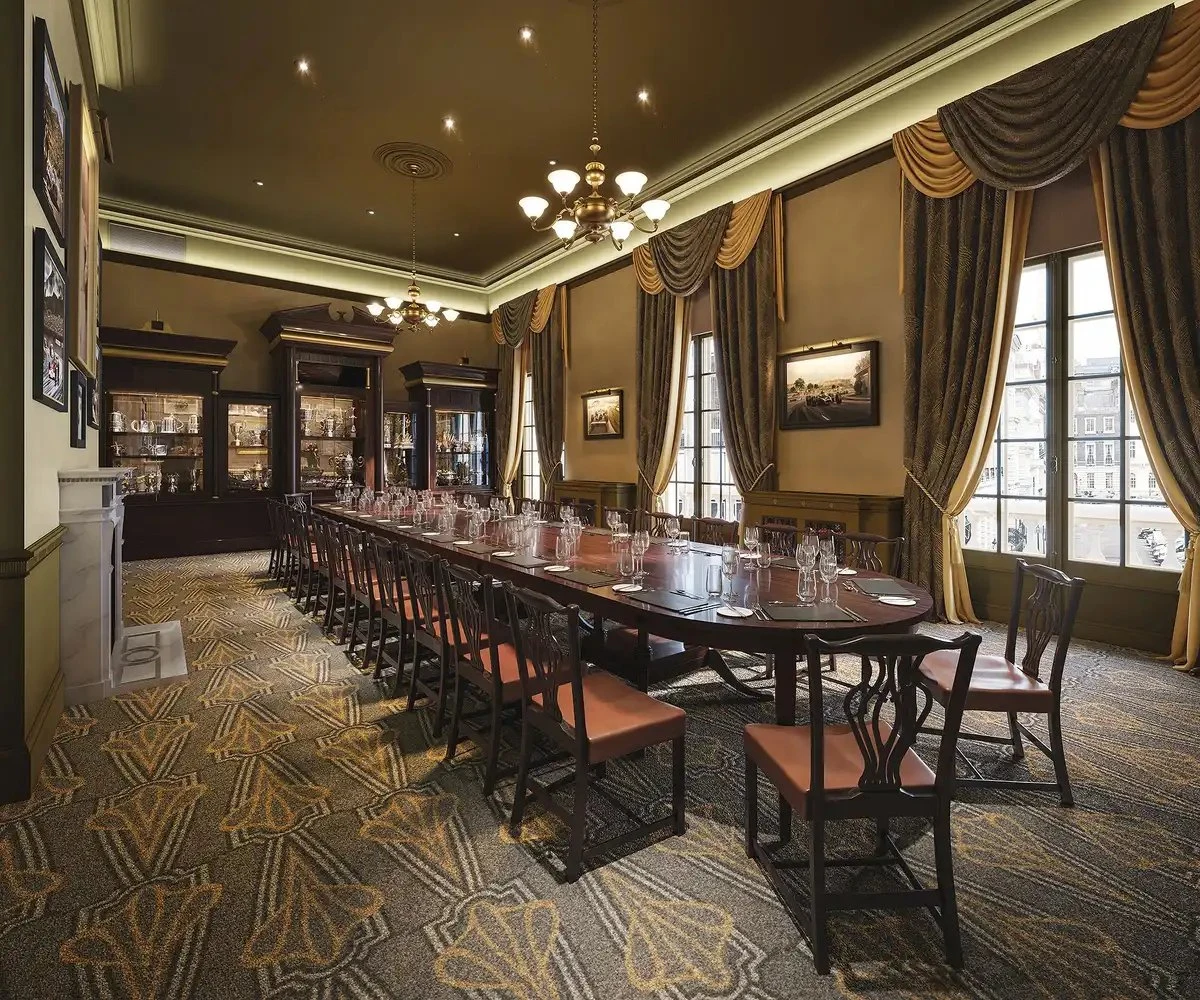
At the bottom of the street, turn left into Pall Mall. The name comes from a seventeenth-century ball game, a relative of croquet. In the nineteenth century the street filled with clubs, and several survive: the Reform Club, register No. 045, the Travellers Club, register No. 027, the Athenaeum, the Army and Navy Club, register No. 047, founded in 1837, the Oxford and Cambridge Club, register No. 038 and the Royal Automobile Club, register No. 264, on the street since 1908. Where St James's Street has Georgian houses, Pall Mall has Italian palaces, and they deserve a piece of their own.
How to read the street
At their late-Victorian peak, London is thought to have had several hundred such clubs. Some kept waiting lists of sixteen years. Most of those clubs are gone, and their names survive only in histories and in our register's closed entries. The survivors share a few habits. They are elected, not bought. They prefer not to be photographed. Their front doors are plain, and the porter is better informed than you are.
You may walk the street at any hour. The windows are lit, the doorways are unmarked, and nobody will stop you looking. Going further is a matter for the members, and they have been saying no, politely, since 1693.
Sources
- White's, Wikipedia
- Brooks's, Wikipedia
- Boodle's, Wikipedia
- Carlton Club, Wikipedia
- Pratt's, Wikipedia
- Pall Mall, London, Wikipedia
- Gentlemen's club, Wikipedia