The cercles of Paris
Horses, motor cars, an onyx staircase and a ballot that one vote in six can sink. A primer on the private clubs of the Right Bank.
- By
- The Index
- Published
- Length
- 4 minute read
- Filed from
- The 8th arrondissement, Paris
In London a club is a club. In Paris it is a cercle, a circle, and the word is exact. The great Parisian clubs are fewer than London's and more candid about what they are for, which is to keep a particular kind of person in the company of others of the same kind.
The senior circle
The oldest of the major clubs traces itself to the Cercle de l'Union, founded in 1828. Its descendant, the Nouveau Cercle de l'Union, was formed in 1985 when the Cercle de l'Union combined with the Nouveau Cercle, which had itself absorbed other clubs earlier in the century, including, in 1946, the members of the Cercle de l'Union artistique. It is regarded as the most senior of the great Paris clubs and was traditionally Legitimist, which is to say loyal to the senior line of the Bourbons long after France had stopped asking.
Its admission rule is a model of Parisian clarity. A candidate needs two sponsors, and one vote against in every six cast is enough to keep a candidate out. It has around 600 members and occupies rooms at 33 rue du Faubourg Saint-Honoré, in a house provided by another club.
The allied officers' club
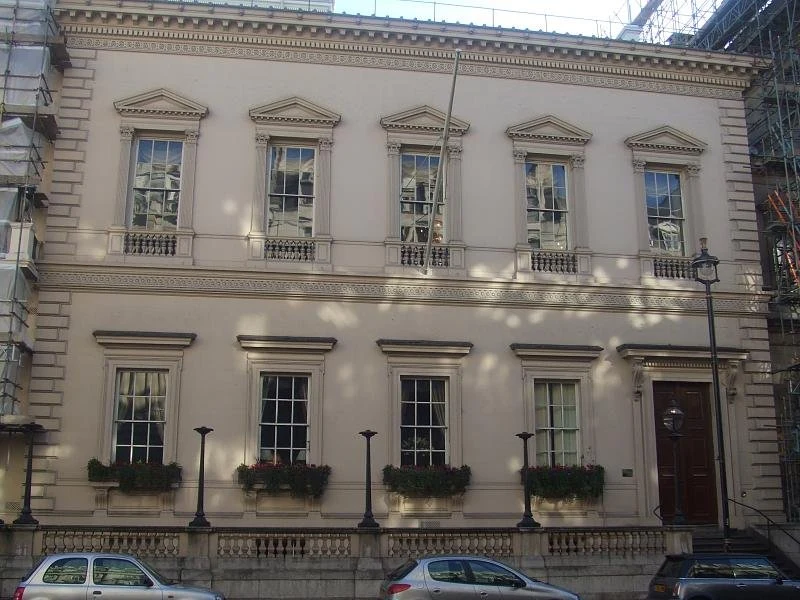
That house belongs to the Cercle de l'Union interalliée, founded in 1917, around the time the United States entered the First World War, to welcome officers and notable figures of the Allied nations. Marshal Foch was among its presidents, and its international membership has included royalty and political figures from many countries. Its home is the Hôtel Perrinet de Jars, next door to the British Embassy, with formal French gardens into which the dining room extends in summer.
It is also, unexpectedly, a sporting club. Below the salons there is a 25-metre swimming pool, squash courts, a hammam and a gym. Members of the Nouveau Cercle de l'Union must also belong to the Interalliée, which makes the senior club in Paris, in effect, a house guest of a younger one.
The horsemen
The Jockey-Club de Paris began in 1834 as a society for the improvement of horse breeding in France, and is now regarded by many as the most prestigious club in Paris. Its present house is at 2 rue Rabelais, near the Champs-Élysées. It has been described as decidedly but not exclusively aristocratic. Election requires five-sixths of the votes present. The club is governed by a president, four vice-presidents and a committee of twenty-five, which is a great deal of government for a club about horses.
One vote against in every six cast is enough to keep a candidate out.
The Jockey-Club's most famous evening was a disaster for someone else. In 1861 Wagner staged Tannhäuser at the Paris Opéra and placed the obligatory ballet in the first act. Members, who habitually arrived for the second act, and for the ballet, found it had already happened. They hissed the production nearly off the stage. Wagner never staged another production in Paris.
The motorists
The Automobile Club de France was founded on 12 November 1895 by the Marquis de Dion, Baron de Zuylen, Count Récopé and Paul Meyan, as a private gentlemen's club. Since 1898 it has occupied grand premises on the Place de la Concorde, a building it shares with the FIA. In 1906 its great race took the name Grand Prix, which the sport has kept ever since. It handed control of French motor racing to the state's federation in 1952. It kept the swimming pool, the library and the cinema.
The onyx staircase
The most spectacular clubhouse in Paris belongs to The Travellers. Since 1904 the club has occupied the Hôtel de la Païva at 25 avenue des Champs-Élysées, a Renaissance-style mansion built between 1856 and 1866 by the architect Pierre Manguin for Esther Lachmann, the courtesan known as La Païva, after her marriage to a Prussian count. Its yellow onyx staircase has been called probably unique in the world. It is, by some distance, the most theatrical way up to a club bar in Europe. It is a gentlemen's club, a cousin in name to the Travellers Club, register No. 027 on Pall Mall. One suspects La Païva would have found that amusing.
The newcomer
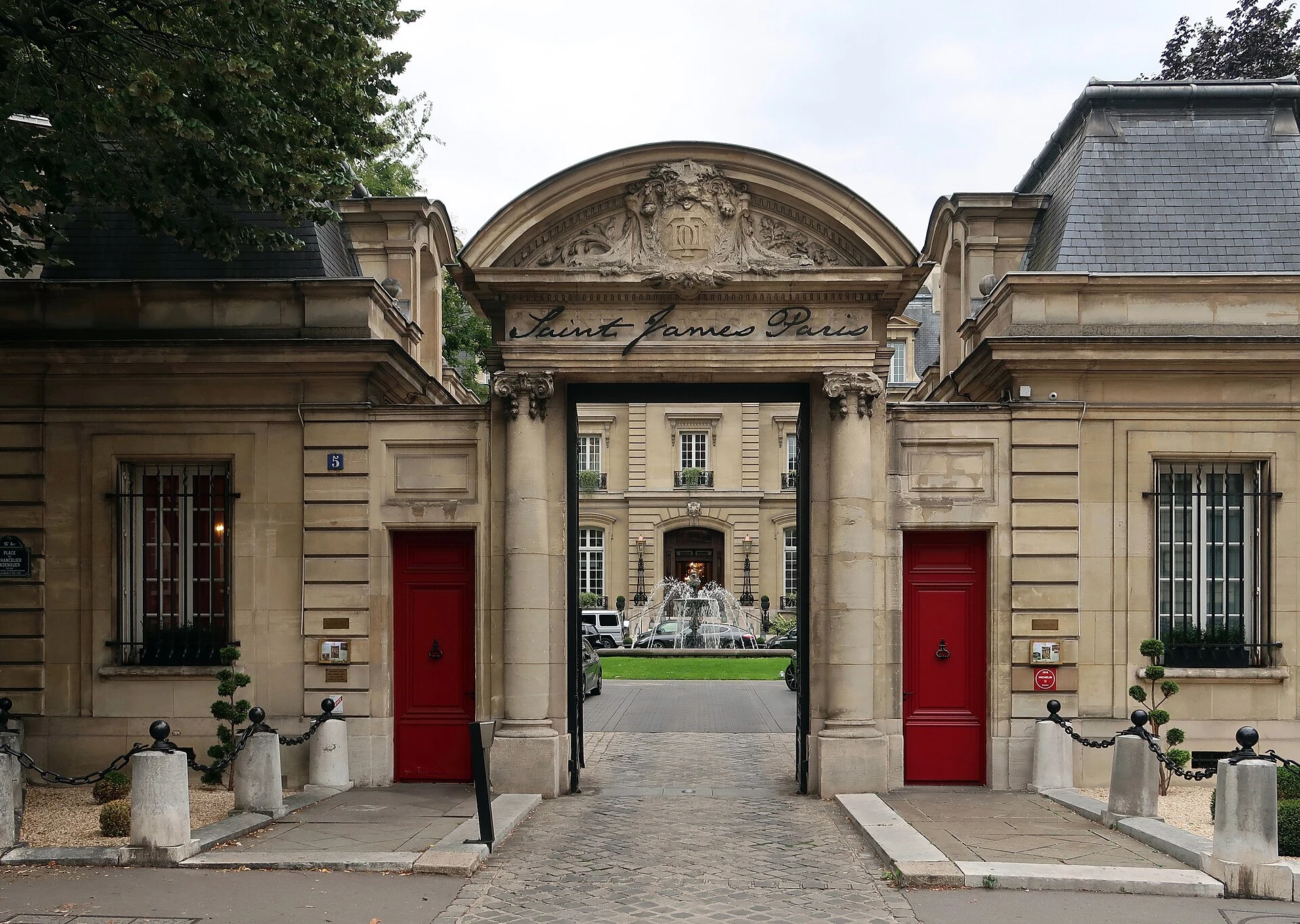
For something less formal, the Saint James Paris, register No. 547 in the 16th arrondissement is a members' club in a mansion built in 1892 by the widow of President Thiers, run partly as a hotel since the 1990s. Its bar is the old wood-panelled library, which has been reported to hold more than 12,000 books, many from the Thiers collection. Members may use it daily; hotel guests share the club's rooms during their stay. We look at it more closely in the rise of the hotel club.
A note on discretion
Little of this is advertised. That is the point. Membership lists are private, sponsorship is everything, and the ballot is unforgiving. If London's clubs are reticent, Paris's are silent. The doors on the Faubourg Saint-Honoré are very handsome. They are also, for nearly everyone, purely decorative.
Sources
- Jockey-Club de Paris, Wikipedia
- Nouveau Cercle de l'Union, Wikipédia
- Cercle de l'Union interalliée, Wikipedia
- Automobile Club de France, Wikipedia
- Hôtel de la Païva, Wikipedia
- Saint James Paris: so British, Luxe Magazine
- Room service: crazy chic at the Hôtel Saint James Paris, France Today